

Sustainability · 2025
In this section51 topics
- Sustainability Policy2 items
- Sustainability Goals & UN SDGs3 items
- Policy Review3 items
- Business Value Chain1 item
- Stakeholder Analysis1 item
- Environmental Policy & Guidelines4 items
- Environmental Policy Review3 items
- Energy — Plan & Guidelines2 items
- Energy — Electricity Consumption1 item
- Energy — Fuel Consumption1 item
- Energy — Targets3 items
- Energy — Performance & Outcomes2 items
- Water — Plan & Guidelines2 items
- Water — Withdrawal, Discharge & Consumption1 item
- Water — Targets3 items
- Water — Performance & Outcomes2 items
- Waste — Plan & Guidelines2 items
- Waste — Generation, Disposal & Recycling1 item
- Waste — Targets3 items
- Waste — Performance & Outcomes2 items
- GHG — Plan & Guidelines2 items
- GHG — Emissions1 item
- GHG — Emissions Verification1 item
- GHG — Principles & Standards1 item
- GHG — Targets1 item
- GHG Targets — Other Targets2 items
- GHG — Performance & Outcomes2 items
- Environmental Legal Incidents1 item
- Social Sustainability — Overview1 item
- Social Policy & Guidelines4 items
- Social Policy Review3 items
- Social — Principles & Standards Practised1 item
- Human Rights Due Diligence2 items
- Employees — Plan & Guidelines3 items
- Employees — Workforce1 item
- Employees — Remuneration & Provident Fund1 item
- Employees — Training & Development1 item
- Employees — Occupational Health & Safety1 item
- Employees — Labour Relations1 item
- Employees — Employee Representation3 items
- Employees — Targets2 items
- Employees — Performance & Outcomes2 items
- Customers — Plan & Guidelines3 items
- Customers — Satisfaction Results1 item
- Customers — Targets2 items
- Customers — Performance & Outcomes2 items
- Community & Social — Plan & Guidelines3 items
- Community & Social — Targets2 items
- Community & Social — Performance & Outcomes2 items
- Other Social Management1 item
- Law Violation Incidents1 item
Sustainability Policy
Has a Sustainability Policy
Yes
Policy Description
The Company A STPI and I Public Company Limited and its subsidiaries are committed to and recognize the importance of sustainable business development to create value and balanced long-term growth, adhering to international best practices and the requirements of the Securities and Exchange Commission (SEC) and the Stock Exchange of Thailand, across economic, social, environmental, and good corporate governance aspects. (Environmental, Social and Governance: ESG), which serves as a crucial foundation for driving the organization to achieve its vision and mission stably.
The Company has established a Sustainable Business Development Policy to serve as a framework for conducting business in line with its vision of becoming a leader in large-scale steel structure fabrication for industry and international export. This ensures that business operations are responsible, transparent, coupled with sustainable growth, and create added value for all stakeholders, with the following key operational guidelines:
1. Economic Value Creation and Innovation ( Economic)
The Company focuses on generating continuous and stable growth in its core businesses, namely steel structure fabrication, and expanding investments in renewable energy, real estate, and logistics businesses, to create appropriate and sustainable returns for shareholders and investors. This is coupled with promoting the use of innovation and technology in developing production processes and services to enhance operational efficiency and elevate the organization's long-term competitiveness. Furthermore, the Company emphasizes responsible supply chain management ( Responsible Supply Chain) from the partner selection process, collaboration with partners, to the delivery of quality and fair products and services to customers. It is also crucial to maximize customer satisfaction for steel fabrication projects in terms of quality, delivery, and safety, and to generate diverse and continuous income from renewable energy businesses, real estate, and logistics businesses.
2. Good Corporate Governance ( Governance)
The Company conducts its business adhering to principles of good governance, transparency, and accountability, within an ethical and moral framework, while considering the protection of rights and fair and equitable treatment of all stakeholders. Furthermore, the Company has established appropriate risk management guidelines and promotes the development of organizational innovation and potential to support stable and sustainable growth, under the framework of good corporate governance policies and related practices in accordance with the guidelines of the Securities and Exchange Commission and the Stock Exchange of Thailand.
3. Social Responsibility and Human Rights ( Social)
The Company prioritizes respect for human rights and fair treatment of labor without discrimination, while also ensuring safety, occupational health, and a suitable working environment in accordance with appropriate standards. Furthermore, the Company continuously promotes the development of personnel potential and skills to accommodate future organizational changes and growth, and aims to build good relationships with communities and society by supporting activities that enhance the quality of life in communities and create sustainable public benefits.
4. Environmental Management and Sustainable Resource Utilization ( Environmental)
The Company aims to reduce negative environmental impacts from its business operations by promoting efficient and valuable use of resources and energy, in line with the Circular Economy concept ( Circular Economy), and participates in addressing climate change through managing and reducing greenhouse gas emissions. Furthermore, the Company emphasizes the conservation of natural resources, ecosystem restoration, and the preservation of biodiversity to create a balance between business operations and long-term environmental care.
Further details regarding the "Sustainable Business Development Policy" can be found on the Company's website: https://www.stpi.co.th/investor-relations-th/corporate-governance/
Sustainability Goals & UN SDGs
Has Sustainability Goals
Yes
Goals Description
Sustainable Development Goals
To ensure concrete sustainability operations, the Company has set key strategic goals to drive the organization, as follows:
-
Economic Aspect (Economic)
The company places importance on the highly satisfactory evaluation results from customers of the steel structure processing business project, covering quality, delivery, and safety, and aims to significantly increase revenue from renewable energy businesses, and real estate and logistics businesses every year.
-
Good Corporate Governance Aspect ( Corporate Governance):
Maintain transparent and auditable management standards to retain the corporate governance rating at a level of "Excellent" From a survey by the Thai Institute of Directors Association (Thai IOD) -
Social Aspect
- Occupational Health and Safety ( Safety Excellence):
Prioritizing personnel safety, with a target to reduce the Lost Time Injury Frequency Rate (LTIFR) to zero per 1,000,000 working hours, to foster a sustainable safety culture.- Social Aspect: Personnel Development ( Human Capital Development):
Aim to enhance personnel skills and potential (Reskill & Upskill) through effective training courses and seminars, setting a target of an average of no less than 10 learning hours per person per year. -
Environmental Aspect - Climate Change ( The company aims to support the country's greenhouse gas reduction targets by setting a goal to reduce greenhouse gas emissions by percentage 15-20 from business-as-usual levels (Business as Usual) while also setting operational directions to achieve Carbon Neutrality by 2050 and striving towards Net Zero Greenhouse Gas Emissions by 2060
Performance results against key sustainable business development goals in 2025 :
| Key Goals | Performance Results |
| Economic Aspect ( Economic) | |
|
*Achieved target* |
| Good Corporate Governance Aspect | |
| Maintaining the company's corporate governance assessment results at a level of "Excellent" From a survey by the Thai Institute of Directors Association (Thai Institute of Directors: IOD) | In the year due to the use of the system E-Report for the first time, and some data was missing. *Unable to meet target* Will proceed with improvements and corrections as per recommendations from Thai Institute of Directors Association further |
| Climate Change Aspect | |
| Reduce greenhouse gas emissions by percentage 15-20 from business-as-usual levels (Business as Usual) while also setting operational directions to achieve Carbon Neutrality by 2050 and striving towards Net Zero Greenhouse Gas Emissions ( Net Zero Greenhouse Gas ) by 2060 | The company has implemented greenhouse gas reduction projects, successfully reducing direct and indirect greenhouse gas emissions from the use of energy totaled 6,796 TonCO2e, a 20% reduction from The company designated 2023 as the base year, with total energy consumption of 8,481 TonCO2e. *Achieved target* |
| Safety Aspect | |
| Lost Time Injury Frequency Rate ( Lost Time Injury Frequency Rate: LTIFR) to zero per 1,000,000 working hours | Number of employees with lost-time injuries: 0 cases/ 1,000,000 working hours *Achieved target* |
| Personnel Development | |
| Development of personnel knowledge and skills through seminars and training, averaging no less than 10 hours/person/year | Development of personnel knowledge and skills in the year In 2025, the average training hours per employee were at 24 hours/person *Achieved target* |
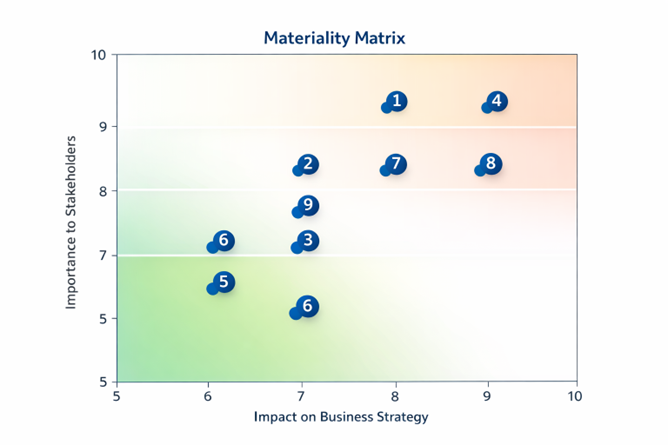
Material Sustainability Topics ( Material topics) aligned with business strategy
The Company's core business involves the manufacturing and installation of steel structures. Large-scale industrial construction, piping systems, and modules
To ensure sustainable operations, the Company has identified material topics related to ESG based on
-
Nature of Business Activities
-
Strategic Risks and Opportunities
-
Relevant Laws and Standards
-
Stakeholder Expectations
Table: Material Topics linked to strategy
| Dimension | Material Topics (Material Topics) | Linkage to Strategy |
| (E) |
|
|
| Social Dimension (S) |
|
|
| Governance Dimension (G) |
|
|
Guidelines for Managing Material Sustainability Topics (Material topics)
The Company has set goals and action plans for managing material sustainability topics, integrating them with corporate strategy to support stable and sustainable long-term growth, as follows:
-
Strictly comply with relevant environmental laws, regulations, and standards.
-
Committed to managing, controlling, preventing, and reducing environmental impacts from operations, including air quality management, noise level management, water quality management, waste management, climate change and greenhouse gas management, efficient resource utilization, and biodiversity, to be effective and efficient, maintaining biodiversity, and regularly reporting and evaluating performance.
-
Operate in accordance with environmental impact assessment reports or other related measures to mitigate potential environmental impacts arising from the company's activities.
-
Support environmentally friendly activities and products or services to reduce environmental impacts.
-
Promote awareness and participation in environmental operations, environmental conservation, and efficient resource utilization for personnel and relevant stakeholders.
-
Continuously support the development of personnel with knowledge and experience in environmental operations and climate change.
-
Develop management systems, promote environmental technology and innovation to enhance capabilities
-
in competition and striving towards sustainable growth goals
Materiality Matrix
Supporting Sustainable Development Goals (SDGs)
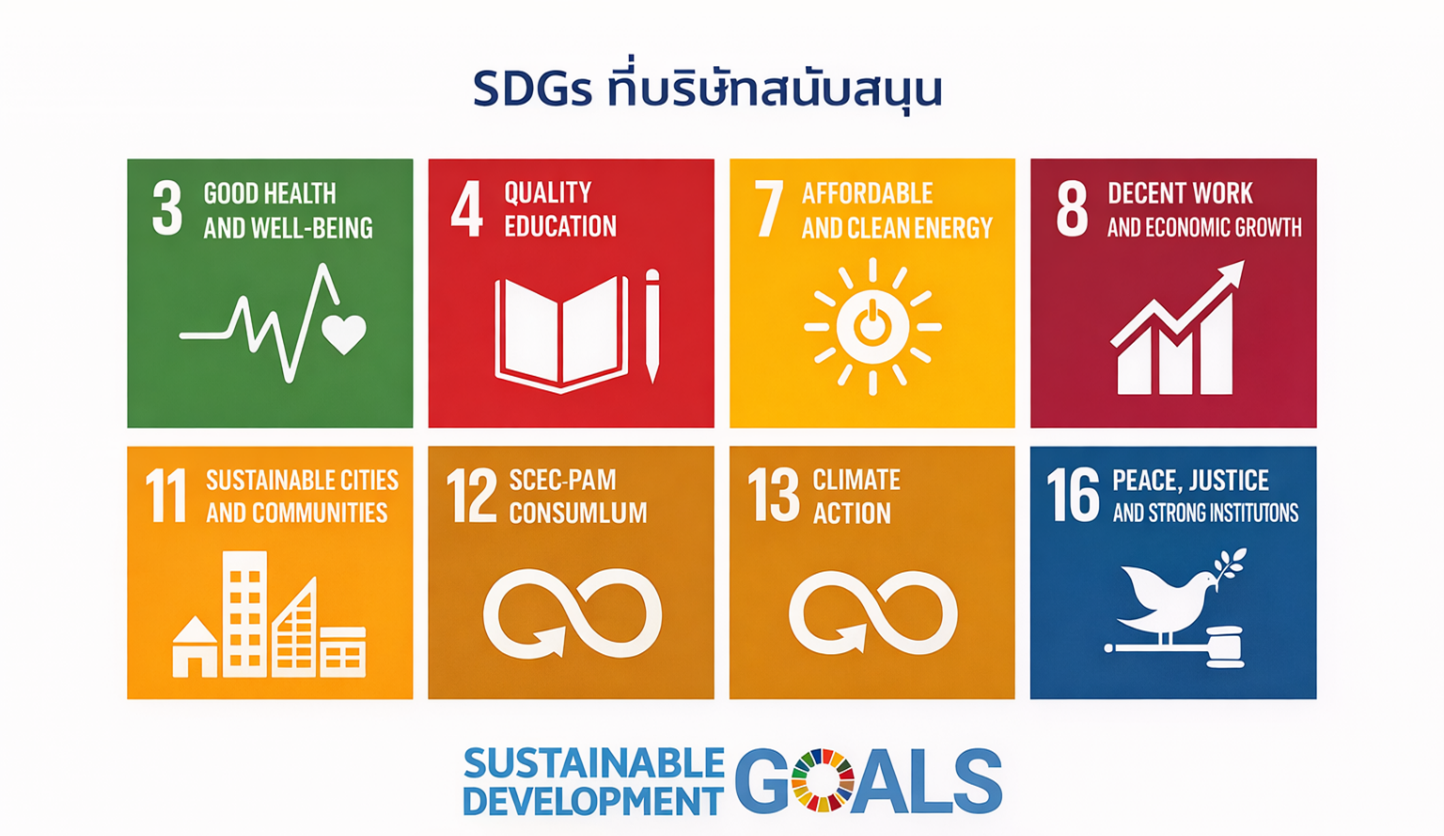
| Dimension | Material Topics ( Material Topics) | Linkage to Strategy | SDGs related |
| (E) | Energy Consumption and Greenhouse Gas Reduction Waste Management Efficient Resource Utilization | Reduce energy costs, increase competitiveness Reduce production waste, increase recycling Support cost-effective production | SDG 7 Affordable and Clean Energy SDG 13 Climate Change Adaptation SDG 12 Responsible Consumption and Production |
| Social Dimension (S) | Safety and Occupational Health Workforce Skill Development Community Relations | Reduce project-related accidents Supporting large-scale projects Reduce complaints from local areas | SDG 3 Good Health and Well-being SDG 4 Quality Education SDG 8 Decent Work and Economic Growth SDG 11 Sustainable Cities and Communities |
| Governance Dimension (G) | Governance and Transparency Legal Compliance and Risk Management Responsible Procurement | Increase investor confidence Reduce organizational risks Strengthen supply chain security | SDG 12 Responsible Consumption and Production SDG 16 Peace, Justice, and Strong Institutions SDG 17 Partnerships for the Goals |
UN Sustainable Development Goals
| SDG Goal |
|---|
| Goal 3 Good Health and Well-being |
| Goal 4 Quality Education |
| Goal 7 Affordable and Clean Energy |
| Goal 8 Decent Work and Economic Growth |
| Goal 11 Sustainable Cities and Communities |
| Goal 12 Responsible Consumption and Production |
| Goal 13 Climate Action |
| Goal 13 Climate Action |
| Goal 16 Peace, Justice and Strong Institutions |
Policy Review
Policy Reviewed This Year
Yes
Policy Changed This Year
Yes
Review Details
The company has established a Sustainable Business Development Policy, committed to and mindful of the importance of sustainable business development. (Sustainable Development) to create value and balanced long-term growth in economic, social, environmental, and good corporate governance aspects. (Environmental, Social and Governance: ESG), which serves as a crucial foundation for driving the organization to achieve the company's vision and mission sustainably, in accordance with the resolution of the Board of Directors Meeting No. 2/2569 on March 13, 2569. Details of the policy can be found at the link.
The company has published the full Sustainable Business Development Policy on its website. Further details can be accessed via the web link. https://www.stpi.co.th/investor-relations-th/corporate-governance/
Business Value Chain
Value Chain Description
The company's business operations cover processes from project development, raw material procurement, production, quality control, to product delivery to clients. Each step is systematically managed to ensure product quality, compliance with client requirements, and timely delivery. The key processes in the company's value chain include:
1. Project and Cost Control, which will be responsible for controlling projects and project costs, from planning and defining project timelines, collecting project budget information, preparing performance summaries for each project compared to the allocated budget, and communicating with and managing project clients, to ensure smooth project execution and reporting results for project managers to promptly review and rectify, in line with project objectives.
2. Marketing and Estimation, which will be responsible for direct client contact. When the company learns that a client wishes to open a tender, either through direct client contact, from a main contractor, or if the company is interested in participating in a tender, the Marketing and Estimation department will contact the client to request relevant documents, such as structural drawings and various specifications. They will then assess the scope of work and estimate the price to participate in the tender through direct client contact.
3. Raw Material Procurement. The consideration for procuring raw materials to be used as components of products, as well as other services, begins from the company's bidding phase through to the production and delivery of goods. Each project contract with a client will involve negotiations regarding the scope of raw material procurement, which is divided into two cases as follows:
3.1 In cases where the client provides the main raw materials, such as steel plates, structural steel, steel pipes, and equipment, the company will manage these raw materials from receipt, ensuring they are in perfect working condition, to reconciling inventory balances with the client.
3.2 In cases where the company procures the main raw materials itself, the company will conduct preliminary price inquiries from suppliers for use in bidding for each project, starting from the marketing and estimation phase. Once the contract is signed and operations commence, the procurement unit will source raw materials and services according to the project budget and production plan. This involves inquiring about raw material prices and various conditions, and selecting the most suitable domestic and international manufacturers or distributors. In the case of importing raw materials for export production, the company will comply with the import duty privileges for raw materials used in production for export, as stipulated by the Board of Investment.
4. Production. The production process begins with engineering design, followed by cutting, drilling, assembling, welding, and the final step of surface coating the workpieces according to client specifications, as well as assembling various components and necessary equipment. Each step requires the expertise of skilled technicians and the use of machinery and equipment to ensure high-quality workpieces and timely delivery.
5. Quality Inspection. The product manufacturing process must be under the quality control of both the production department and the quality inspection department. A quality inspection plan is established for each production stage, and product quality must be managed to meet various standards as per client requirements and legal specifications, before the products are delivered to clients.
6. Product Delivery. Upon completion of product manufacturing, products will be delivered according to the schedule agreed upon with the client, ensuring client satisfaction, and including product warranty after delivery.
Stakeholder Analysis
Stakeholder Analysis
| Stakeholder Type | Stakeholders | Stakeholder Expectations | Response to Expectations | Communication Activities |
|---|---|---|---|---|
| Internal stakeholders | 2897 · Description: Board of director · 2913 · Description: Shareholders · 2921 · Description: Employees | Shareholders
• Good returns
• Effective corporate governance
• Stable, continuous, and sustainable business growth
• Accurate, complete, timely, and transparent company information
• Robust risk management system
• Effective audit and control system
Board of Directors
• Compliance with laws and ethical principles
• Transparent and auditable operations
• Business success
• Oversight of business growth and adherence to ESG principles
Employees
• Job security and career advancement
• Appropriate salary and wage adjustments
• Provision of suitable welfare and workplace safety
• Equality and opportunities for professional growth
• Plans for knowledge and skill development training
• Conducive working environment | Shareholders: The Company is committed to achieving quality and stable growth to ensure shareholders receive sustainable returns through efficient operations and the expansion of investment opportunities that generate continuous income. These include investments in renewable energy businesses and real estate development and logistics businesses. The Company respects shareholders' rights to receive necessary information equally and discloses accurate and factual information, conducting business with honesty, integrity, transparency, and fairness.Board of Directors: The Company prioritizes good corporate governance and management in accordance with ESG principles, strictly adhering to and enforcing policies. Operational results are reported to the directors.Employees: The Company is committed to caring for and treating employees fairly and appropriately in terms of opportunities, compensation, appointments, transfers, and potential development. Furthermore, the Company ensures a safe working environment for the lives and property of its employees, is open to receiving feedback and suggestions from employees, and treats employees at all levels with fairness and equality. | 2941 · Description: Online Communication · 2942 · Description: Internal Meeting · 2944 · Description: Annual General Meeting (AGM) · 2945 · Description: Complaint Reception · 2948 · Description: Training / Seminar |
| External stakeholders | 2894 · Description: Creditor · 2899 · Description: Suppliers · 2900 · Description: Business partners · 2902 · Description: Community · 2923 · Description: Customers | Customers
• Participate in bidding with transparent pricing
• Receive quality work as specified
• Satisfaction with timely product delivery
• Adhere to fair agreements
• Product and service warranty
• Confidentiality of customer information
Partners
• Receive accurate and timely information according to terms
• Adhere to fair payment terms and conditions
• Fair and transparent pricing competition
• Knowledge sharing and development of raw material production processes
Creditors
• Ability to comply with contract terms and conditions
• Transparency in business operations
Competitors
• Compete fairly and transparently
• Exchange of information, product news, raw material sources, and production machinery
Community, Society, Environment, Health, and Safety
• Maintain good relations
• Support various community activities
• Avoid creating negative impacts on the community and society, both in terms of safety and environment
• Adhere to human rights principles and oppose corruption | Customers
The Company is committed to providing a service system that ensures customer satisfaction, offering excellent service by treating customers appropriately and providing complete, accurate, and undistorted information about its services. Furthermore, the Company conducts customer satisfaction surveys to continuously develop and improve its services.
Partners
The Company is committed to treating its partners, who are considered business allies, with equality and mutual benefit. It strives to develop and maintain sustainable relationships with partners, fostering mutual trust. The Company adheres strictly to procurement regulations, which clearly define procedures and practices in accordance with ISO 9001:2015.
Creditors
The Company is committed to strictly adhering to its obligations to creditors, ensuring the full and timely repayment of loans and interest to all types of lenders, and fully complying with the terms and conditions of loan agreements.
Competitors
The Company is committed to conducting business within the framework of fair competition. It does not seek confidential information from competitors through dishonest or inappropriate means and refrains from any actions that infringe upon the intellectual property of others or competitors.
Community, Society, Environment, Health, and Safety
The Company is committed to maintaining a good overall society by complying with relevant laws and/or regulations and consistently cooperating with government agencies. It takes measures to prevent its operations from causing damage to the quality of life of the community, society, and environment. The Company promotes and contributes to society through initiatives such as improving the quality of life, promoting education, energy conservation, and environmental protection, for the righteous advancement of society. | 2940 · Description: Social Event · 2948 · Description: Training / Seminar |
Environmental Policy & Guidelines
Introduction
Environmental and Climate Change Policy
STP&I Public Company Limited and its subsidiaries recognize their responsibility to conduct business with accountability towards society, the economy, the environment, and good corporate governance, aiming for sustainable growth. To support its vision and mission, and to ensure comprehensive operations and achievement of company goals, the Company has established an environmental and climate change policy to serve as a guideline for business operations, considering the preservation and prevention of environmental impacts, as follows:
-
Strictly comply with relevant environmental laws, regulations, and standards.
-
Committed to managing, controlling, preventing, and reducing environmental impacts from operations, including air quality management, noise level management, water quality management, waste management, climate change and greenhouse gas management, efficient resource utilization, and biodiversity, to ensure efficiency and effectiveness, maintain biodiversity, and regularly report and evaluate operational performance.
-
Operate in accordance with environmental impact assessment reports or other relevant measures to mitigate potential environmental impacts arising from the Company's operations.
-
Support environmentally friendly activities, products, or services to reduce environmental impact.
-
Promote awareness and participation in environmental operations, environmental conservation, and efficient resource utilization among personnel and relevant stakeholders.
-
Support the continuous development of personnel's knowledge and experience in environmental and climate change operations.
-
Develop management systems, promote environmental technology and innovation to enhance competitiveness and strive towards sustainable growth goals.
The Company has disclosed its full environmental and climate change policy on its website. Details can be found at the web link. https://www.stpi.co.th/investor-relations-th/corporate-governance/
Has an Environmental Policy
Yes
Policy Description
The Company has been certified with the Environmental Management System (ISO 14001:2015) and recognizes the importance of participating in maintaining a good quality society and environment. Therefore, various activities are carried out to promote and support sustainable social and environmental development. Management guidelines include:
-
Conducting business with consideration for social and environmental impacts.
-
Committing to operations aimed at reducing and preventing pollution to the environment.
-
Strictly complying with relevant laws, regulations, and operational procedures.
-
Continuously develop and improve operational standards to comply with environmental requirements. Further details can be found at the following web link: https://www.stpi.co.th/investor-relations-th/corporate-governance/
Environmental Guidelines
| Guideline |
|---|
| Electricity Management |
| Fuel Management |
| Renewable/Clean Energy Management |
| Water Management |
| Waste Management |
| Greenhouse Gas and Climate Change Management |
| Air Quality Management |
| Noise Pollution Management |
Environmental Policy Review
Policy Reviewed This Year
Yes
Review Details
The company has reviewed its environmental policy over the past year, continuing to prioritize environmental goals similar to the previous year, including: Electricity energy management Oil and fuel management Water resource and water quality management Waste management Greenhouse gas and climate change management, and Air quality management, etc., which aligns with the company's operational activities.
Policies & Guidelines Changed
| Change |
|---|
| Electricity Management |
| Fuel Management |
| Water Management |
| Waste Management |
| Greenhouse Gas and Climate Change Management |
| Air Quality Management |
Energy — Plan & Guidelines
Has an Energy Management Plan
Yes
Plan Description
The company prioritizes efficient energy management and has continuously implemented energy management through analysis, planning, and defining appropriate energy usage guidelines to achieve maximum efficiency and reduce unnecessary energy consumption in its operations.
The company has promoted the participation of executives and employees in energy conservation by implementing measures to reduce energy consumption within the organization, such as replacing light bulbs and fixtures with energy-saving LED lights, turning off lights and electrical equipment when not in use, including turning off lights during lunch breaks, adjusting the on-off times of high-mast lights to align with usage, utilizing video conferencing systems to reduce travel, and planning travel to reduce fuel consumption. Furthermore, the company emphasizes preventive maintenance for machinery and electrical equipment to ensure that various systems operate efficiently and safely.
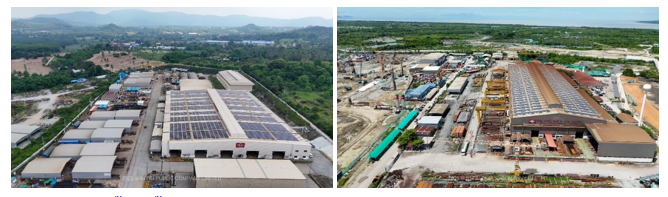
Concurrently, the company has implemented energy conservation projects by installing solar power generation systems (Solar Cells) to support the use of clean energy, reduce reliance on primary energy sources, and mitigate environmental impact.
Additionally, the company encourages relevant executives and employees to attend training on carbon and greenhouse gas management to apply this knowledge in operations and disseminate it within the organization.
These actions reflect the company's commitment to efficient and resource-effective energy use and to contributing to the reduction of greenhouse gas emissions to support sustainable business operations.
Energy — Electricity Consumption
Electricity Consumption
| Metric | Current Year | Previous Year | Two Years Ago | Remark |
|---|---|---|---|---|
| Total electricity consumption within the organization (Kilowatt-Hours) | 7,991,178.98 | 4,836,159.62 | 7,702,280.06 | Total electricity consumption per unit: kWh/ton of output |
| Electricity purchased for consumption from non-renewable energy sources (Kilowatt-Hours) | 6,151,191.4 | 3,841,159.77 | 6,693,591.57 | |
| Electricity purchased or generated for consumption from renewable energy sources (Kilowatt-Hours) | 1,839,987.58 | 994,999.85 | 1,008,688.49 |
Energy — Fuel Consumption
Fuel Consumption
| Metric | Current Year | Previous Year | Two Years Ago |
|---|---|---|---|
| Crude oil (Barrels) | 0 | 0 | 0 |
| Coal (Metric tonnes) | 0 | 0 | 0 |
| Jet fuel (Litres) | 0 | 0 | 0 |
| Diesel (Litres) | 778,047.92 | 622,640.99 | 1,474,474.21 |
| Gasoline (Litres) | 2,944.79 | 3,511.55 | 3,607.2 |
| Fuel oil (Litres) | 0 | 0 | 0 |
| Natural gas (Standard cubic feet) | 0 | 0 | 0 |
| LPG (Kilograms) | 41,247.56 | 41,500 | 35,098 |
| Steam (Metric tonnes) | 0 | 0 | 0 |
Energy — Targets
Introduction
The company aims to manage electricity by maximizing the efficiency of solar power utilization (Solar Roof) to reduce electricity procurement, and to promote electricity conservation.
Unit of measurement: kWh/ton of work
Has Set Targets
Yes
Targets
| Target | Base Year | Base Year Value | Target Year | Target Change (%) | Unit | Per Unit (Intensity) | Per Unit — Please Specify |
|---|---|---|---|---|---|---|---|
| Increase of electricity consumption from renewable energy sources | 2,023 | 7,702,280.06 | 2,025 | 3 | Kilowatt-hour | Metric ton of product | Metric ton of product |
Energy — Performance & Outcomes
Has Performance Results
Yes
Performance Description
In 2025, the Company set a target to reduce electricity consumption by 3% compared to 2023. Operational results indicate that electricity consumption in 2025 was 172.03 kilowatt-hours per ton, whereas in 2023, it was 435.75 kilowatt-hours per ton. This led to a reduction in electricity consumption compared to the base year, successfully exceeding the established target.
Water — Plan & Guidelines
Has a Water Management Plan
Yes
Plan Description
Water resources are natural resources crucial for sustaining life and economic operations. The Company is committed to continuously planning and controlling water usage, including planning for the inspection of tap water leaks at various points. Campaigns and public relations efforts are conducted to promote water conservation among employees, fostering awareness of its value and maximizing its benefits. As the Company is located in the eastern region, characterized by a hot and humid climate with rainfall almost year-round, the Company has identified an opportunity to construct underground rainwater storage ponds to utilize the water for consumption and other purposes, such as cleaning, watering plants, and spraying water for dust control. This is considered an effective utilization of natural resources and, importantly, leverages the climatic advantages for maximum benefit.
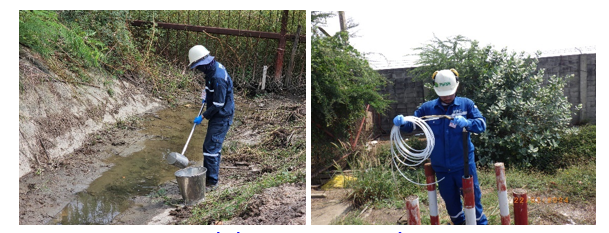
The Company prioritizes the management and control of water pollution from its operations. This involves utilizing appropriate wastewater treatment systems, namely Aeration Lagoons and Septic Tanks, to ensure that the quality of discharged wastewater meets legally prescribed standards. The efficiency of the wastewater treatment system is continuously controlled, supervised, and maintained. This includes the weekly addition of EM (Effective Microorganisms) to enhance wastewater treatment efficiency, reduce organic matter, and control odors within the system. Furthermore, regular cleaning and maintenance of the aeration ponds are conducted to preserve the system's operational efficiency and mitigate the risk of water pollution.
Additionally, the Company has mandated quarterly monitoring of wastewater quality analysis results, engaging an organization authorized by the Department of Industrial Works to conduct the analysis. The results of the wastewater quality analysis for external discharge meet the legally prescribed standards and comply with environmental impact prevention and mitigation measures, as well as the specific Environmental Monitoring Measures (IEE) prescribed for the establishment.
Water — Withdrawal, Discharge & Consumption
Water Withdrawal, Discharge & Consumption
| Metric | Current Year | Previous Year | Two Years Ago |
|---|---|---|---|
| Total water withdrawal (Cubic meters) | 105,439 | 87,918.56 | 140,459 |
| Total water withdrawal by third-party water (Cubic meters) | 105,439 | 87,918.56 | 140,459 |
| Total water withdrawal by surface water (Cubic meters) | 0 | 0 | 0 |
| Total water withdrawal by groundwater (Cubic meters) | 0 | 0 | 0 |
| Total water withdrawal by seawater (Cubic meters) | 0 | 0 | 0 |
| Total water withdrawal by produced water (Cubic meters) | 0 | 0 | 0 |
| Percentage of wastewater treated before discharge (%) | |||
| Total water discharge (Cubic meters) | 84,351.2 | 70,334.85 | 112,367.2 |
| Total water discharge to third-party water (Cubic meters) | 0 | 0 | 0 |
| Total water discharge to surface water (Cubic meters) | 84,351.2 | 70,334.85 | 112,367.2 |
| Total water discharge to groundwater (Cubic meters) | 0 | 0 | 0 |
| Total water discharge to seawater (Cubic meters) | 0 | 0 | 0 |
| Total water consumption (Cubic meters) | 21,087.8 | 17,583.71 | 28,091.8 |
| Recycled water (Cubic meters) |
Water — Targets
Introduction
Unit of measurement: cubic meter / ton
Has Set Targets
Yes
Targets
| Target | Base Year | Base Year Value | Target Year | Target Change (%) | Unit |
|---|---|---|---|---|---|
| Reduction of water withdrawal | 2,023 | 140,459 | 2,025 | 3 | Cubic meters |
Water — Performance & Outcomes
Has Performance Results
Yes
Performance Description
In 2025, the company set a target to reduce its total water consumption by 3% compared to the previous year. Operational results showed that water consumption in 2025 was 0.45 cubic meters per ton, compared to 1.59 cubic meters per ton in 2023. This resulted in a significant reduction in water consumption.
This reduction in water consumption was partly due to the company conducting water pressure testing activities in its operational processes in 2023, which required a relatively high volume of water. In contrast, in 2025, the company did not carry out such activities, leading to a significant decrease in the organization's overall water consumption compared to the previous year.
Waste — Plan & Guidelines
Has a Waste Management Plan
Yes
Plan Description
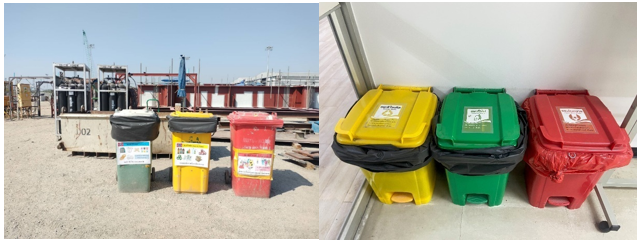
The Company places significant importance on the management of waste and by-products generated from its operations. This involves establishing waste segregation processes at the source to prevent contamination and systematically managing waste according to its type, under the framework of the Circular Economy concept. This approach emphasizes efficient resource utilization and reducing the amount of waste requiring final disposal. Monthly records of waste quantities are maintained. Disposal data is legally recorded through the Department of Industrial Works' unused material management system and is traceable.
Furthermore, the Company conducts campaigns and activities for general waste management following the 3R principles, namely:
-
Reduce, by minimizing the introduction of waste into the factory. For example, campaigning for the use of tiffin carriers and cloth bags instead of single-use food containers, and promoting the use of reusable water bottles instead of plastic cups and single-use water bottles, etc.
-
Reuse, by bringing used items back into use. For example, using both sides of paper, using cardboard boxes for document storage, using document envelopes for internal document transfer, and converting used paint cans into toolboxes.
-
Recycle. Campaigning for waste segregation before disposal, including general waste, wet waste, recyclable waste, and hazardous waste. Unused scrap materials that can be transformed for further utilization are segregated.
Types of waste generated
-
Hazardous waste, such as contaminated materials, contaminated containers, light bulbs, paint sludge, and solvents, etc., will be sent for disposal to organizations authorized by the Department of Industrial Works.
-
General waste and non-hazardous waste, such as plastic bags, paper, fire-resistant fabric, and scrap metal, etc., are partly sent for disposal to entities authorized by the local municipality or disposal companies licensed by the Department of Industrial Works. The portion that can undergo transformation processes (Recycle) will be sold to organizations that purchase scrap materials for further processing. Some general waste that cannot undergo traditional recycling processes will be converted into Refuse Derived Fuel (RDF) for subsequent energy production, thereby supporting the appropriate circular utilization of resources.
Waste — Generation, Disposal & Recycling
Waste Generation, Disposal & Recycling
| Metric | Current Year | Previous Year | Two Years Ago |
|---|---|---|---|
| Total waste generated (Kilograms) | 6,988,275 | 2,424,115 | 2,763,347 |
| Non-hazardous waste (Kilograms) | 4,142,408 | 2,309,545 | 1,991,897 |
| Non-hazardous waste - Landfilling (Kilograms) | |||
| Non-hazardous waste - Incineration (with energy recovery) (Kilograms) | |||
| Non-hazardous waste - Incineration (without energy recovery) (Kilograms) | |||
| Non-hazardous waste - Other disposal operations (Kilograms) | |||
| Hazardous waste (Kilograms) | 2,845,867 | 114,570 | 771,450 |
| Hazardous waste - Landfilling (Kilograms) | |||
| Hazardous waste - Incineration (with energy recovery) (Kilograms) | |||
| Hazardous waste - Incineration (without energy recovery) (Kilograms) | |||
| Hazardous waste - Other disposal operations (Kilograms) | |||
| Total reused/recycled waste (Kilograms) | 16,180 | 388,670 | 2,273,258.84 |
| Reused/Recycled non-hazardous waste (Kilograms) | 16,180 | 388,670 | 2,273,258.84 |
| Reused non-hazardous waste (Kilograms) | |||
| Recycled non-hazardous waste (Kilograms) | |||
| Reused/Recycled hazardous waste (Kilograms) | |||
| Reused hazardous waste (Kilograms) | |||
| Recycled hazardous waste (Kilograms) |
Waste — Targets
Introduction
Unit of measurement: kilogram/ton of work
Has Set Targets
Yes
Targets
| Waste Type | Disposal Approach | Target | Base Year | Base Year Value | Target Year | Target Change (%) | Unit | Per Unit (Intensity) | Per Unit — Please Specify |
|---|---|---|---|---|---|---|---|---|---|
| Non-hazardous waste | 2758 · Description: Reuse · 2759 · Description: Recycle | Reduce waste volume | 2,023 | 2,763,347 | 2,025 | 3 | Kilograms | Metric ton of product | Metric ton of product |
Waste — Performance & Outcomes
Has Performance Results
Yes
Performance Description
When compared to the base year, it was found that in 2025 There is the total waste volume increased from 2,763,347 kilograms to 6,988,275 kilograms, which resulted from a significant increase in production volume.
When considering waste per unit of production, it was found that the company's total waste volume decreased from originally 201.10 kilograms per ton in 2023 to 150.44 kilograms per ton in 2025 which means the total waste volume can be reduced from the original target set at 3% to be reduced by as much as 25.20% in 2025
GHG — Plan & Guidelines
Has a GHG Management Plan
Yes
Plan Description
The Company has installed a solar cell power generation system and utilizes electricity from solar cells to indirectly reduce greenhouse gas emissions.
GHG — Emissions
GHG Emissions
| Metric | Current Year | Previous Year | Two Years Ago |
|---|---|---|---|
| Total GHG emissions (Metric tonnes of carbon dioxide equivalent) | 6,796.65 | 4,960.04 | 8,481.32 |
| Total greenhouse gas emissions 1 (Metric tonnes of carbon dioxide equivalent) | 3,264.85 | 2,745.26 | 4,635.94 |
| Total greenhouse gas emissions 2 (Metric tonnes of carbon dioxide equivalent) | 3,421.29 | 2,136.45 | 3,722.98 |
| Total greenhouse gas emissions 3 (Metric tonnes of carbon dioxide equivalent) | 110.51 | 78.33 | 122.4 |
GHG — Emissions Verification
Emissions Verified by a Third Party
No
GHG — Principles & Standards
Principles & Standards Applied
| Standard |
|---|
| 2671 |
GHG — Targets
Has Set GHG Targets
Yes
GHG Targets — Other Targets
Introduction
Unit of measurement: tons of carbon dioxide equivalent / tons of work
Other GHG Targets
| Emission Scope | Base Year | Base Year Emissions | Near-term Target Year | Near-term Target Change (%) | Target Year | Target Change (%) | Unit |
|---|---|---|---|---|---|---|---|
| 2715 | 2,023 | 8,481.32 | 2,025 | 3 | 2,025 | 3 | Metric tonnes of carbon dioxide equivalent |
GHG — Performance & Outcomes
Has Performance Results
Yes
Performance Description
By 2025, the company has set a target for managing greenhouse gas reduction from business operations by reducing greenhouse gas emissions by 3% compared to 2023. According to the data, in 2025, the greenhouse gas emissions per unit of production were 0.15 tCO2/ton of output, and in 2023, they were 0.48 tCO2/ton of output. Comparing 2025 and 2023, it was found that in 2025, the greenhouse gas emissions per unit of production decreased, aligning with the set target.
Environmental Legal Incidents
Legal Violation Incidents
| Metric | Current Year | Previous Year | Two Years Ago |
|---|---|---|---|
| Number of cases or incidents of legal violations or negative environmental impact (cases) | 0 | 0 | 0 |
Employees — Plan & Guidelines
Has an Employee Management Plan
Yes
Plan Description
The Company and its group of companies prioritize fair treatment of employees, coupled with respect for universal human rights principles. This is based on the principles of non-discrimination and equal opportunities for joining the organization, from recruitment, development, and performance evaluation processes, to welfare and career advancement. The Company believes that continuous and serious human resource operations will enhance work efficiency, employee engagement with the organization, and lead to mutual sustainable growth.
The Company ensures fair, accurate, complete, and timely payment of compensation to employees. Wage and salary adjustments are considered based on performance evaluation cycles, and bonuses are paid according to company performance and individual employee evaluations, utilizing transparent and fair data for consideration.
Fair Recruitment and Employment
The Company has established a code of conduct for business operations that covers human rights respect, equal treatment of employees, and compliance with relevant laws. The Company has developed a workforce plan to support current and future business operations, offering opportunities for knowledgeable and capable individuals to join the Company through various channels such as the Company's website, social media, and external recruitment platforms.
The Company adheres to the principle of non-discrimination, regardless of gender, religion, race, language, or physical ability. It also sets appropriate compensation and benefits that are competitive in the labor market and supports career advancement based on employees' potential and performance.
Furthermore, the Company complies with laws related to the employment of persons with disabilities. In cases where the number of employees with disabilities does not meet the legal criteria, the Company has contributed funds to the Fund for the Promotion and Development of the Quality of Life for Persons with Disabilities as stipulated by the Ministry of Labor.
Personnel Potential Development
The Company has a policy for continuous personnel development to enhance the knowledge, abilities, and skills necessary for operations, as well as to promote appropriate work behavior and positive attitudes. This aims to ensure employees are valuable resources for the organization, society, and the nation.
The Company is committed to treating employees fairly in all dimensions, including development opportunities, compensation, appointments and transfers, as well as ensuring a safe working environment. This also includes the formulation of a Child Labor and Modern Slavery Policy, which has been communicated to stakeholders and published on the Company's website.
Complaint Channels
The Company provides opportunities for both internal and external stakeholders to express opinions, suggestions, or report complaints regarding human rights violations or inappropriate business conduct through designated channels, such as the Company's website or by sending an email to the Chairman of the Audit Committee. This is in accordance with the Company's good corporate governance policy.
Leveraging Technology for Personnel Development
The Company prioritizes the adoption of digital technology in human resource management to enhance work efficiency and internal communication. Online systems are utilized for meetings, communication, and knowledge sharing among employees, as well as supporting remote work (Work from Home) as appropriate. Tools and channels are also provided to facilitate comprehensive learning and self-development for employees.
Training and Personnel Development
The Company views training as a crucial mechanism for developing personnel potential to enhance operational efficiency and support organizational growth. In addition to general management system courses, the Company also provides courses aligned with business direction and organizational sustainability, such as:
-
Leadership Development
-
Supply Chain Management
-
Energy and Environmental Conservation
-
Social and Environmental Operations (ESG)
The Company also organizes orientation for new employees to provide knowledge about the organization, relevant laws, operational procedures, workplace safety, and basic environmental awareness, enabling employees to commence work efficiently.
Plan Areas
| Plan Area | Other — Please Specify |
|---|---|
| Fair employee compensation | |
| Employee training and development | |
| Migrant/foreign labor | |
| Child labor | |
| Occupational health and safety in workplace | |
| Others | Human Resources Recruitment and Training |
Employees — Workforce
Workforce Data
| Metric | Current Year | Previous Year | Two Years Ago |
|---|---|---|---|
| Total number of employees (Persons) | 2,625 | 1,437 | 4,032 |
| Number of male employees (Persons) | 2,018 | 1,123 | 3,000 |
| Number of female employees (Persons) | 607 | 314 | 1,032 |
| Total employment of disabled persons (people) | 4 | 5 | 6 |
| Total disabled employees (people) | 4 | 5 | 6 |
| Total male disabled employees (people) | 3 | 3 | 5 |
| Total female disabled employees (people) | 1 | 2 | 1 |
| Total disabled workers who are non-employee (people) | 0 | 0 | 0 |
| Contributions to the fund for promoting and improving the quality of life for disabled persons | 1 | 1 | 1 |
| Total number of male employees in operational level (Persons) | 1,973 | 1,076 | 2,950 |
| Total number of male employees in management level (Persons) | 38 | 40 | 43 |
| Total number of male employees in executive level (Persons) | 7 | 7 | 7 |
| Total number of female employees in operational level (Persons) | 540 | 255 | 968 |
| Total number of female employees in management level (Persons) | 63 | 54 | 59 |
| Total number of female employees in executive level (Persons) | 4 | 5 | 5 |
Employees — Remuneration & Provident Fund
Remuneration & Provident Fund
| Metric | Current Year | Previous Year | Two Years Ago |
|---|---|---|---|
| Total disabled employees (people) | 905,875,999 | 847,281,617 | 1,454,304,101 |
| Total male employee remuneration (Baht) | 676,004,410 | 675,530,974 | 1,190,605,505 |
| Total female employee remuneration (Baht) | 229,871,589 | 171,750,643 | 263,698,596 |
| Number of employees eligible to participate in PVD (persons) | 240 | 231 | 248 |
| Total number of employees joining employee provident fund (Persons) | 181 | 187 | 146 |
| Percentage of total number of employees joining employee provident fund to total number of employees (%) | 6.9 | 13.01 | 3.62 |
| Number of PVD members / Total eligible employees (%) | 75.42 | 80.95 | 58.87 |
| Total amount of provident fund contributed by the Company (Baht) | 2,241,678.64 | 3,353,177.44 | 2,250,111.17 |
| Total amount of provident fund contributed by employee (baht) |
Employees — Training & Development
Training Data
| Metric | Current Year | Previous Year | Two Years Ago |
|---|---|---|---|
| Average employee training hours (Hours / Person / Year) | 24.91 | 15.73 | 13.83 |
| Employee development and training expenses (baht) | 969,450.87 | 728,901 | 1,111,190 |
Employees — Occupational Health & Safety
Occupational Health & Safety Data
| Metric | Current Year | Previous Year | Two Years Ago |
|---|---|---|---|
| Total number of lost time injury incidents by employees (Cases) | 0 | 0 | 0 |
Employees — Labour Relations
Labour Relations Data
| Metric | Current Year | Previous Year | Two Years Ago |
|---|---|---|---|
| Total voluntary resignations (Persons) | 826 | 502 | 1,626 |
| Male employees who voluntary resigned (Persons) | 725 | 408 | 1,301 |
| Female employees who voluntary resigned (Persons) | 101 | 94 | 325 |
| Percentage of employee turnover leaving the Company voluntarily (%) | 31.47 | 34.93 | 40.33 |
| Evaluation result of employee engagement | 0 | 0 | 0 |
Employees — Employee Representation
Introduction
Welfare Committee
The Company has established Welfare Committees in its establishments at all factories and branches with 50 or more employees. The Welfare Committee in each establishment consists of employee representatives (at least 5 persons) elected by ballot. Their duties include consulting with employers, preparing, overseeing, and inspecting welfare provisions for employees in accordance with the Labor Protection Act B.E. 2541 (1998) to promote benefits and good relations. This is considered the creation of a bipartite system, providing opportunities for employees to participate in welfare management, and reducing claims and conflicts within the establishment.
The Welfare Committee has the following duties:
-
Consult with employers to arrange welfare for employees
-
Provide consultation and offer recommendations to employers regarding the provision of welfare for employees.
-
Monitor, control, and oversee the welfare provisions provided by the employer to employees.
Propose opinions and guidelines for beneficial welfare provisions for employees to the Labor Welfare Committee.
Employees Are Represented Collectively
Yes
Forms of Representation
| Form |
|---|
| Welfare committee |
Employees — Targets
Has Set Employee Targets
Yes
Targets
| Indicator | Target Areas | Base Year | Base Year — Description | Target Year | Target Year — Description |
|---|---|---|---|---|---|
| Number of complaints or disputes related to human rights violations of employees | 2990 · Other name: Complaints or disputes related to the violation of employee human rights · Description: Others | 2,023 | Number of complaints or disputes related to human rights violations of employees is 0 | 2,025 | Number of complaints or disputes related to human rights violations of employees is 0 |
Employees — Performance & Outcomes
Has Performance Results
Yes
Performance Description
Employee and Labor Management Outcomes
Through the implementation of the Company's human resources and labor management policies and guidelines, in accordance with the principles of social dimension sustainability development, employee and labor management has been efficient, transparent, and compliant with labor laws, as well as relevant human rights standards.
In 2025, the Company did not encounter any significant labor disputes or complaints between the Company and its employees or workers. Furthermore, there were no instances of work stoppages, disputed terminations, or labor rights violations that impacted the Company's business operations. Additionally, through operations focused on quality, workplace safety, and efficient production process control, the Company did not encounter any claims for damages or additional expense claims from customers resulting from deficiencies in employee performance or production processes. The Company consistently maintained high standards of work quality and operational safety.
These operational results reflect the efficiency of the human resource management system, the promotion of a safe working environment, and the continuous development of employee potential. This supports the Company's stable business operations and adherence to international standards for labor, safety, and sustainable business practices.
As a result of the aforementioned social dimension of sustainability management, in 2025, the Company had no significant disputes related to employees and labor, and no additional claims for expenses from customers, due to work that maintained excellent quality and high safety standards, as detailed below, which meets all international standard criteria.
Details of Occupational Health, Safety, and Environmental Performance Table
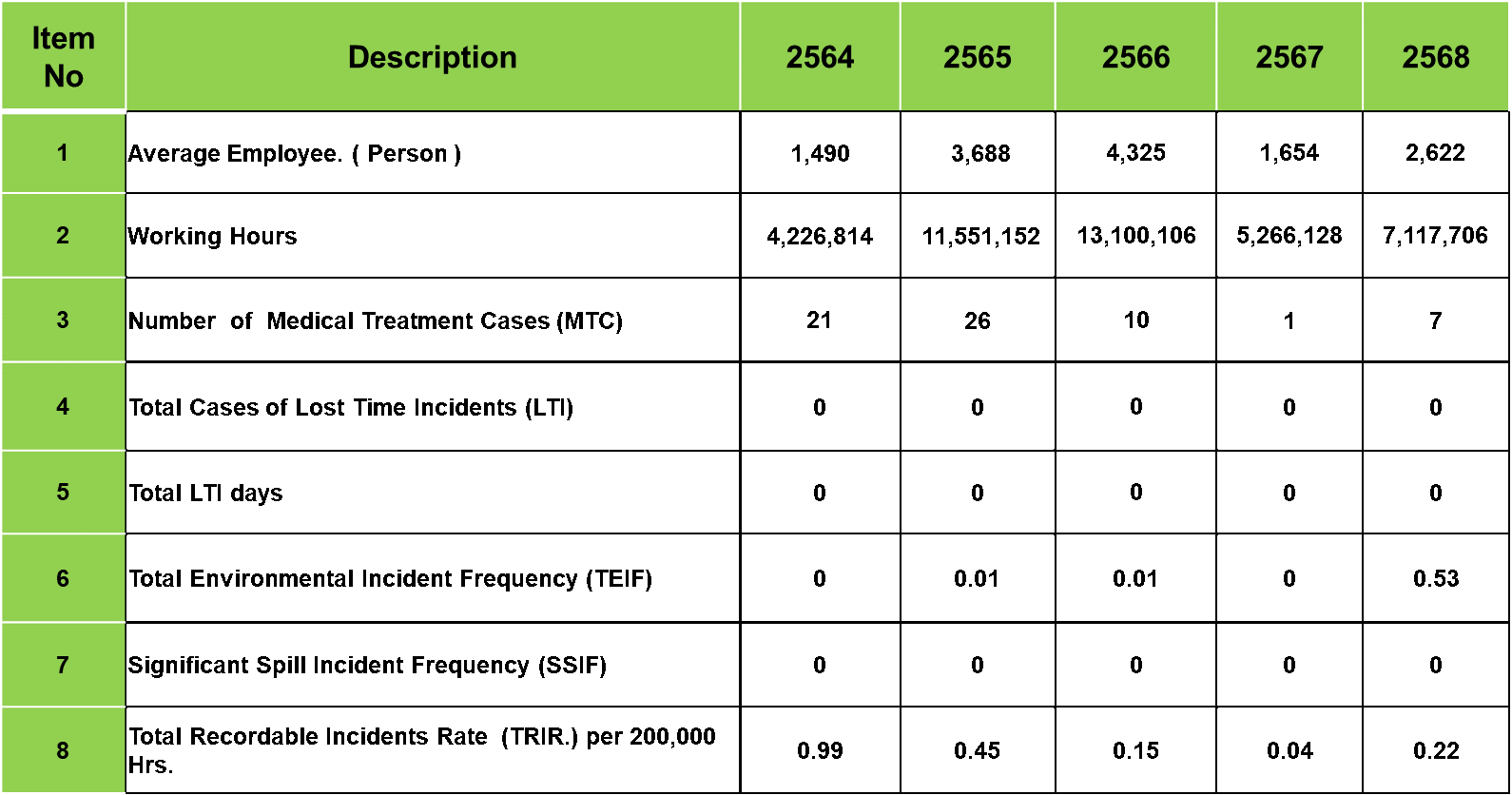
From the table, it can be observed that in 2025, the Company achieved a record of 7.12 million working hours without a Loss Time Injury (LTI), which is an excellent level and generates maximum customer satisfaction, as the focus on workplace safety is a key success factor for the project.
Customers — Plan & Guidelines
Has a Customer Management Plan
Yes
Plan Description
The company is committed to developing a customer service management system to achieve maximum customer satisfaction, adhering to principles of quality, transparency, and fairness in service delivery. This includes providing complete, accurate, and undistorted information about products and services. Furthermore, the company regularly conducts customer satisfaction surveys to analyze evaluation results and continuously improve operational processes and services, thereby elevating business standards and building long-term trust.
The company has established the following guidelines for customer care operations:
-
Participate in bidding processes with transparency and offer fair prices in accordance with ethical business competition principles.
-
Deliver quality work and products that meet the specifications and standards agreed upon with customers.
-
Manage production and product delivery to meet deadlines, thereby ensuring customer satisfaction.
-
Adhere to business terms and agreements with customers fairly and transparently.
-
Provide quality assurance for products and services according to specified conditions.
-
Strictly maintain the confidentiality of customer information and related business data.
Plan Areas
| Plan Area |
|---|
| Protection of customer personal information |
Customers — Satisfaction Results
Customer Satisfaction Results
| Metric | Current Year | Previous Year | Two Years Ago |
|---|---|---|---|
| Evaluation results of customer satisfaction | 1 | 1 | 1 |
Customers — Targets
Has Set Customer Targets
Yes
Targets
| Indicator | Target Areas | Base Year | Base Year — Description | Target Year | Target Year — Description |
|---|---|---|---|---|---|
| Customer satisfaction assessment results of not less than 70% | 3009 · Description: Development of customer satisfaction and customer relationship · 3010 · Description: Consumer data privacy and protection | 2,023 | Customer satisfaction assessment results of not less than 70% | 2,025 | Customer satisfaction assessment results of not less than 70% |
Customers — Performance & Outcomes
Has Performance Results
Yes
Performance Description
In 2024, the company received customer satisfaction evaluations based on established criteria, which built confidence and satisfaction among customers. This is because past deliverables were of high quality, on time, and operations were conducted safely, consistently earning recognition from clients. As a result, clients continuously provide opportunities for additional proposals, and the company has also had the opportunity to bid for new clients.
For 2025, the company conducted a survey and evaluation of customer satisfaction, covering key aspects such as work quality, safety, coordination, document management, as well as project planning and management. The survey results from a total of 6 projects revealed that
-
Number of 4 projects received a satisfaction level More than 80%
-
Number of 2 projects received a satisfaction level
Furthermore, clients provided additional suggestions for improving the company's operations, such as promptly presenting environmental reports to clients and closely collaborating with clients on operational planning in urgent cases. The company has incorporated these suggestions into its annual management review process to serve as a guideline for continuous operational improvement and development.
The aforementioned evaluation results not only reflect customer satisfaction with the company's operations but also serve as significant encouragement for all employees involved in creating value for clients. They also act as a driving force for the company to continuously develop its business operations sustainably, while strengthening trust and fostering excellent long-term relationships with clients.
Community & Social — Plan & Guidelines
Has a Community & Social Plan
Yes
Plan Description
The company and its group have a policy of treating employees fairly and respecting human rights, starting from providing broad opportunities in recruitment to select personnel to join the group. Employee training is provided, and there is a clear and consistent performance evaluation system. The company believes that continuous and serious operations will enhance employee efficiency and commitment to the organization, which is a practice for sustainable mutual success.
Human Resource Recruitment The company has established a business code of conduct based on key principles of human rights respect, non-discriminatory treatment of employees, and operations that comply with laws and align with the business plan. The company has therefore planned its workforce to support current business operations, as well as future plans of the group, by posting advertisements to invite interested individuals to join the company. This is disclosed through the company's website, the company's Facebook page, and external channels, along with clear information about the company and recruitment, without any discrimination based on gender, religion, race, language, or physical ability. Fair compensation is offered, along with comprehensive monetary and non-monetary benefits that are competitive with other companies. Opportunities for advancement and growth within the company are provided based on performance, and personnel are systematically promoted and developed.
The company complies with annual laws regarding the employment of persons with disabilities. Although the number of disabled employees hired by the company does not meet the specified criteria, the company has contributed funds to the fund as stipulated by the Ministry of Labor.
Management Guidelines The company has a policy to develop the personnel of the group to possess knowledge, abilities, and professional work skills, desirable work behavior, and a positive attitude towards work, making them valuable employees to the organization, society, and the nation. Furthermore, the company is committed to ensuring fair and appropriate treatment of employees in terms of opportunities, compensation, appointments, transfers, potential development, and maintaining the safest possible working environment. Additionally, the company promotes adherence to human rights policies and has further developed a policy on child labor and modern slavery in 2023, which has been communicated to stakeholders and disclosed on the company's website, and is included in Attachment 9 of this One Report.
Complaint Handling Furthermore, the company is open to receiving opinions, suggestions, and complaints from both internal and external stakeholders. Channels for reporting complaints regarding violations of human rights principles are provided through the company's website and/or email to the Chairman of the Audit Committee, as detailed in Attachment 7: Good Corporate Governance Policy.
Application of Technology in Personnel Development Regarding the long-term human resource development policy, the company recognizes the benefits and necessity of utilizing modern tools for human resource management to keep pace with the changes in the digital world. Technology is integrated to transform work methods and communication, fostering mutual learning among employees through online systems, online meetings, working from home, and providing tools and channels to facilitate all employees in using technology for work and self-development comprehensively.
Company Personnel Development Training Courses The company recognizes that training is a method to enhance the working capabilities of internal personnel, leading to the efficient development of operational potential and alignment with the company's needs. It also serves to transfer personal experience to the next generation of trainees. In addition to general management system courses that employees can apply to their work, the company also offers personnel development training courses focusing on leadership development, promoting environmental care and energy conservation, Supply Chain management, and social and environmental operations, among others.
Occupational Health, Safety, and Environment The company prioritizes employee safety by issuing a declaration on "Occupational Safety, Health, and Working Environment Policy," strictly controlling and monitoring compliance with safety regulations and relevant laws, and referencing occupational health, safety, and environmental standards. Annual training is provided, and implementation results are reported directly to the Executive Committee, with details as follows:
-
Prevent accidents, injuries, and illnesses due to work operations through the serious cooperation of all personnel and contractors, as well as limiting and controlling risks in unsafe operations by assessing the risks of required activities, conducting job hazard analyses, holding pre-job meetings, and verifying safety readiness before commencing work in the area.
-
Develop guidelines for emergency situation control to minimize losses. Regularly conduct emergency response drills, ensuring they cover all necessary activities.
-
Strictly comply with all laws, regulations, and rules regarding safety, and implement good safety management standards in business operations.
-
Provide personal protective equipment suitable for the work and in sufficient quantities.
-
Mitigate and control risks that may lead to accidents and potential health impacts from work operations, adequately and appropriately.
-
There are operational procedures, action plans, and training, as well as appropriate knowledge dissemination to all levels of employees, to ensure they possess sufficient knowledge, understanding, and information regarding occupational safety. This serves as a guideline for preventing work-related hazards or various illnesses, and can also be applied in daily life.
-
Ensure the implementation of safety measures for employees and related parties by providing a safe and hygienic working environment.
-
Provide training and practice sessions according to the training plan, aligned with position levels and responsibilities, to enable proficient performance and correct use of tools and equipment. Such training adheres to the company's annual training plan.
-
Review the occupational health, safety, and environmental management policy and arrange for periodic inspections and evaluations.
-
Listen to opinions and suggestions from employees via suggestion boxes, business partners, communities, government agencies, and other stakeholders to make improvements or discuss together, thereby increasing confidence in occupational health, safety, and environmental operations.
For the year 2025, the company and its subsidiaries have arranged training courses on occupational safety in accordance with the annual training plan, for example:
-
Course: "Safety Officer at Supervisor Level (Jor Por Supervisor)"
-
Course: "Professional Supervisor Potential Development"
-
Course: "Occupational Safety Committee (OSC)"
-
Course: "First Aid & CPR"
-
Course: "Basic Fire Fighting and Evacuation"
-
Course: "Risk Assessment"
-
Course: "Communication Techniques with Employees on Safety"
-
Course: "Integrated ISO 14001:2015 and ISO 45001:2015 Internal Audit"
-
Course: "Driving Emergency Medical Service Vehicles and Ambulances"
-
Course: "Safety in Confined Space Work"
Plan Areas
| Plan Area |
|---|
| Employment and professional skill development |
| Occupational health, safety, health, and quality of life |
Community & Social — Targets
Has Set Community & Social Targets
Yes
Targets
| Indicator | Target Areas | Base Year | Base Year — Description | Target Year | Target Year — Description |
|---|---|---|---|---|---|
| No lost-time work accidents occurred. | 3041 · Description: Occupational health, safety, health, and quality of life | 2,023 | No lost-time work accidents occurred. | 2,025 | No accidents from work that resulted in time off work. |
Community & Social — Performance & Outcomes
Has Performance Results
Yes
Performance Description
The company prioritizes conducting business responsibly towards all stakeholder groups, including communities surrounding its establishments. It focuses on operations that consider quality, safety, environment, and continuous improvement of community quality of life, with the following key operational guidelines:
-
Quality, Environmental, and Safety Management. The company maintains a team responsible for quality, environment, and safety at its establishments to oversee operations in accordance with established standards, as well as to continuously coordinate and build good relationships with surrounding communities.
-
Promoting knowledge and community participation. The company organizes educational activities and training for employees, communities, students, and interested individuals to foster understanding of the company's business operations, as well as to promote knowledge of clean energy and appropriate resource utilization.
-
Supporting community activities. The company allocates a budget to support community activities in various areas such as education, local traditions and culture, hygiene, and environmental conservation, to jointly improve the quality of life for people in the community.
-
Creating local employment opportunities. The company prioritizes employing personnel from surrounding communities, both as permanent and temporary staff, based on their potential and suitability, to promote income generation and skill development for local personnel.
5) Corporate Social Responsibility (CSR) activities aligned with business operations.
The company conducts corporate social responsibility activities in conjunction with its business processes, aiming to create value for stakeholders and society as a whole, as follows:
-
Operate in accordance with engineering requirements and international standards to ensure high-quality and safe work for users, including monitoring and recording accident-free work statistics.
-
Strictly adhere to trade terms and agreements, including maintaining the confidentiality of customer and partner information.
-
Manage resources efficiently and with environmental consideration, regularly monitoring environmental quality such as air, noise, wastewater, and dust.
-
Operate under an environmental management system in accordance with standards. ISO 14001:2015 To control and reduce environmental impacts, while promoting efficient resource utilization, such as reducing energy consumption, using double-sided paper, and separating waste for recycling.
-
Promote the correct use of tools, machinery, and equipment, and ensure regular maintenance to reduce the risk of accidents and losses.
-
Ensure employee welfare and safety according to standards. ISO 45001:2018 To reduce work-related risks and create a safe working environment, which positively impacts the quality of life for employees and their families.
Corporate Social Responsibility Activities.
In 2025, the company carried out the following Corporate Social Responsibility (CSR) activities:
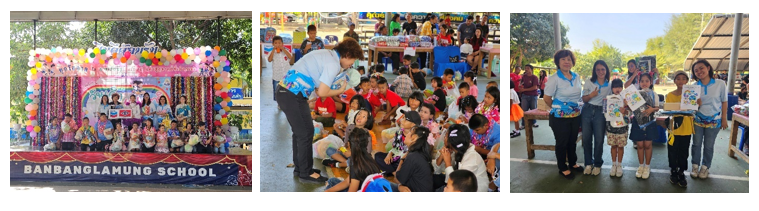
1) National Children's Day Activity at Ban Bang Lamung School.
The company organized activities on National Children's Day at Ban Bang Lamung School to promote and raise awareness of the importance of children and youth, as well as to instill environmental conservation awareness and proper waste separation. The company also organized activities to enhance learning and creativity for students from kindergarten to primary school, such as a marine animal quiz, an eco-friendly waste separation activity, and a coloring contest, which received excellent cooperation and interest from students and teachers.
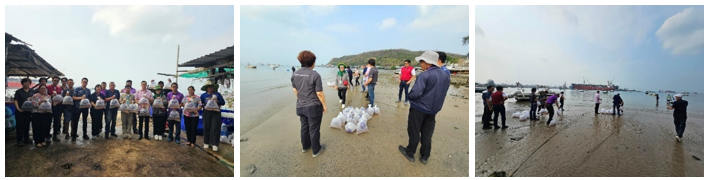
2) Release of Aquatic Species “White Shrimp” Activity at Laem Chabang Beach.
To conserve and restore natural resources, enhance the abundance of marine ecosystems sustainably, and foster awareness of the value of natural resources, the company released 700,000 white shrimp into the sea.
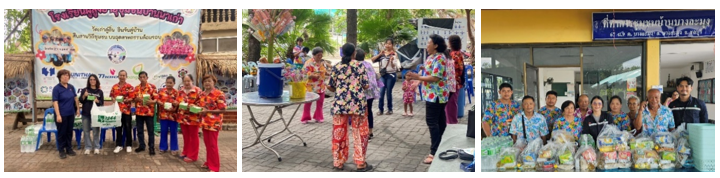
3) Songkran Tradition of Pouring Water on Elders' Hands Activity.
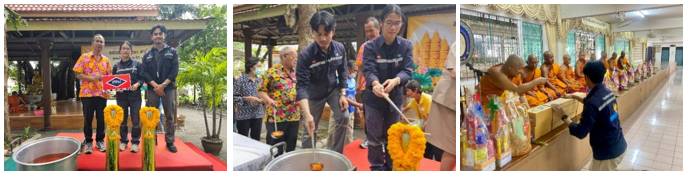
To participate in preserving the tradition of pouring water on elders' hands, a cherished community culture, the company joined in bathing Buddha statues and pouring water to seek blessings from elders, while also providing drinking water, snacks, and consumer goods sets to elders in Ban Na Kao and Ban Bang Lamung communities.
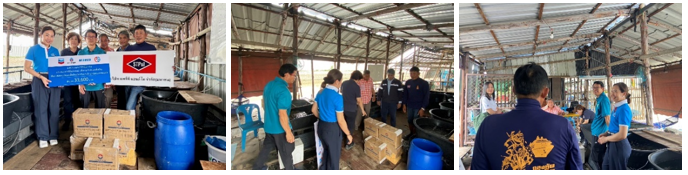
4) Solar Cell Battery Equipment Support Project.
To promote and support aquaculture, enhance ecosystem abundance, and sustainably conserve marine natural resources, the company donated 12 solar cell batteries to Ban Tao Thong Aquatic Animal Bank, Ban Ao Udom Community, and the Community Aquatic Animal Bank of the Ban Bang Lamung Model Fishery Group.
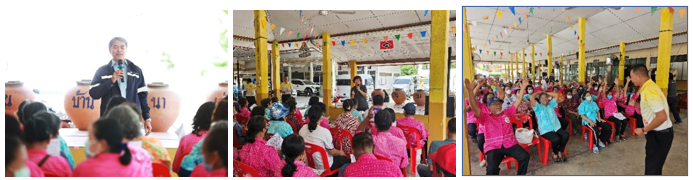
5) STPI Cares for Community Health Project at Ban Na Kao Community.
To promote physical and mental well-being among the elderly in the community, and to raise awareness and appreciation for self-care, the company arranged a medical team to conduct health check-ups for the elderly, along with organizing activities to strengthen relationships between the company and the community. Furthermore, vocational promotion for the visually impaired was also provided, with the company arranging a team of visually impaired masseurs to provide health massages to the elderly in this community.
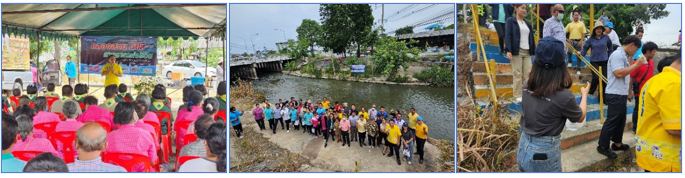
6) Beautiful Canal, Clear Water, River of Life Project on World Environment Day.
To raise awareness among government organizations, private sectors, schools, and communities regarding water resources and water source conservation, the company organized an activity to add 150 EM Balls (Effective Microorganism balls) into the Ban Na Kao community canal to restore water quality. This will lead to a balanced aquatic ecosystem and benefit the environment, as well as the quality of life for people in the community sustainably.
7) Lent Candle Offering Activity.
To conserve and perpetuate the noble Buddhist traditions, the company participated in casting and offering Lent candles to Wat Ban Na Kao, Wat Sri Thammaram, and Ban Thung Krad, as well as joining the Lent candle procession ceremony and listening to monks chant prayers.
8) International Coastal Cleanup Activity at the beach area of Ban Bang Lamung Elderly Social Welfare Development Center, Chonburi Province, on International Coastal Cleanup Day.
<0TG2f95Ms9PH>
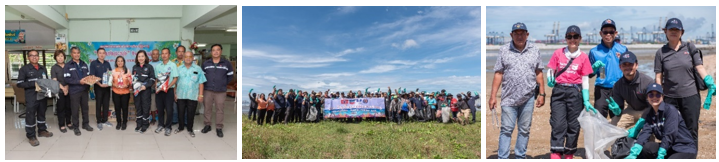
Details of the action plan (Guideline) for developing communities to be self-reliant sustainably or solving social problems implemented in 2025 (e.g., selecting communities for development, listening to community needs, making agreements with communities, monitoring activities undertaken, budget used, duration of each project, etc.)
As a result of these operations, in 2025, the company received no complaints from communities related to its business operations, reflecting appropriate management that considers the impact on surrounding communities and stakeholders.
Other Social Management
Plan & Outcomes — Description
policy and Approach practice aspects human rights
Law Violation Incidents
Law Violation Incidents
| Metric | Current Year | Previous Year | Two Years Ago |
|---|---|---|---|
| The total number of cases or incidents of significant violations of laws or regulations regarding social and human rights (Cases) | 0 | 0 | 0 |
| The total number of cases or incidents that cause significant labor disputes (Cases) | 0 | 0 | 0 |
| The total number of cases or complaints related to consumer rights violations (Cases) | 0 | 0 | 0 |
| The total number of cases or complaints related to partner rights violations (Cases) | 0 | 0 | 0 |
| The total number of cases or incidents that cause disputes with the community/society (Cases) | 0 | 0 | 0 |
| The total number of cases or incidents related to cyber security or customer data breaches (Cases) | 0 | 0 | 0 |
| The total number of cases or incidents related to safety and occupational health at work (Cases) | 0 | 0 | 0 |